If you run a small school, you already know the paradox: smaller enrollment doesn’t mean smaller administrative responsibility. Student records still need to be accurate. Attendance still needs to be tracked daily. Fees still need to be collected; parents still need to be kept informed, and your staff still need reliable tools to do their jobs without burning out. A data management system is the infrastructure that makes all of that manageable, and choosing the right school management system from the start is one of the most consequential decisions a small school leader can make.
This guide breaks down exactly what these systems are, what they do, and how to evaluate which one fits your school’s size, structure, and goals.
The Problem That Data Management Systems Solve
Small schools often start the same way; a handful of students, a couple of staff members, and a collection of tools combined to handle registration, attendance, and communication.
That setup works right up until it doesn’t. And when it breaks down, when attendance records conflict, when a parent can’t get a straight answer about their invoice, when a staff member leaves and takes the “system” with them in their head, the administrative cost is felt immediately.
School data management software exists to replace that fragility with structure. It centralizes student records, automates routine processes, connects communication channels, and gives school leaders a real-time view of how their institution is actually operating. For small schools, where every staff member handles multiple roles, and there’s no dedicated IT department, that structure isn’t a luxury. It’s what makes sustainable operations possible.
Ready to Simplify School Data Management?
Discover smarter ways to organize student data with Muntazim.
What Is an Educational Data Management System?
It is a digital platform that organizes, stores, and manages all the data generated by a school’s daily operations, including student enrollment records, attendance logs, academic performance data, financial records, staff information, and communication history in a single, secure, accessible system.
Unlike general-purpose tools (spreadsheets, email clients, payment apps), a data management system is purpose-built for school operations. Every feature is designed around the specific workflows of an educational institution: how students enrol, how attendance is recorded, how grades are tracked, how fees are collected, and how parents receive updates.
The distinction matters because purpose-built systems don’t just store data, they connect it. A student’s enrollment record links to their attendance history, which connects to their academic profile, which feeds into the parent communication that goes home. When all this lives in one system, the school operates as a connected whole rather than a collection of disconnected parts.
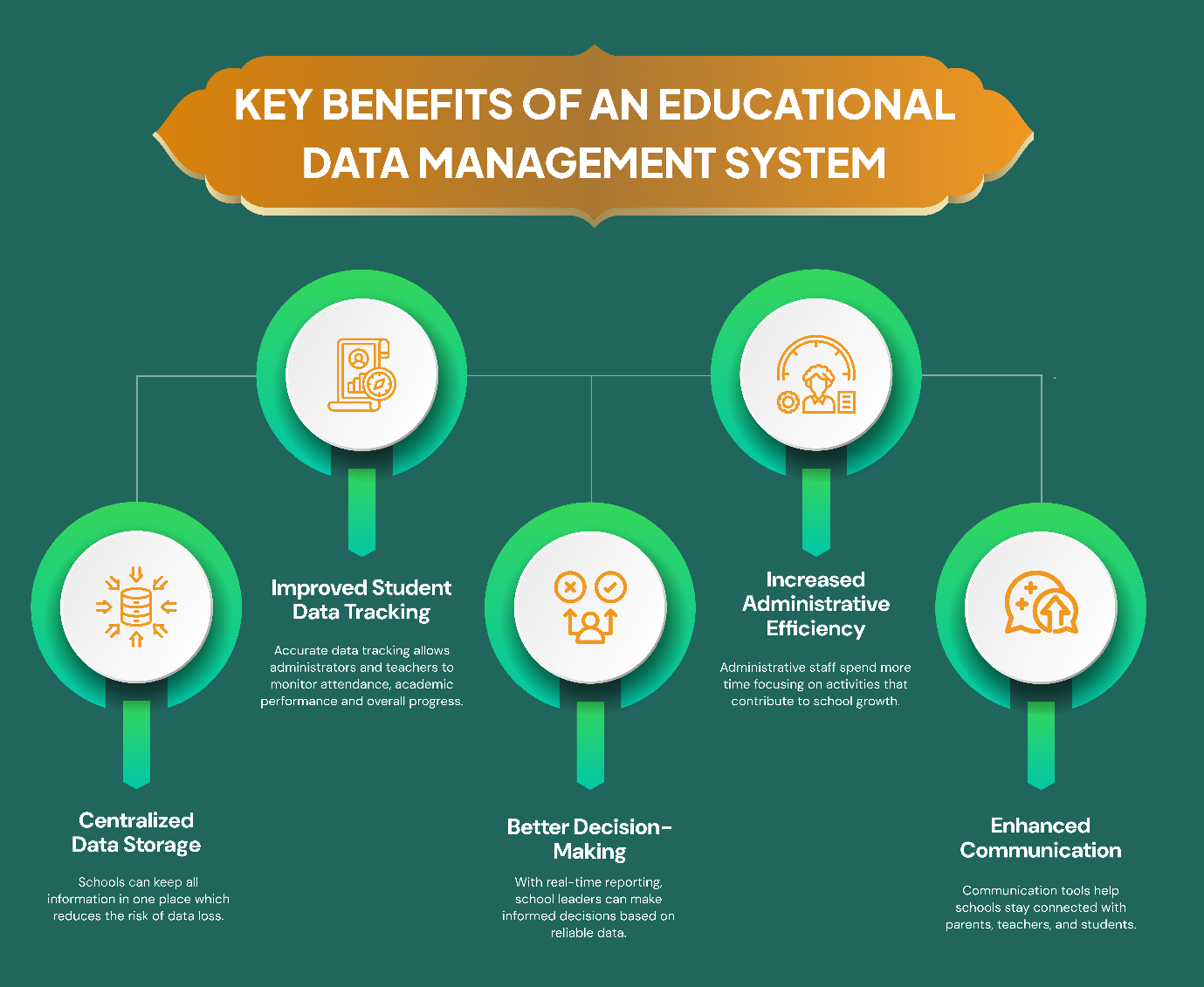
Core Components of an Educational Data Management System
Understanding what these systems contain helps you evaluate which one fits your school. Here are the core modules to look for:
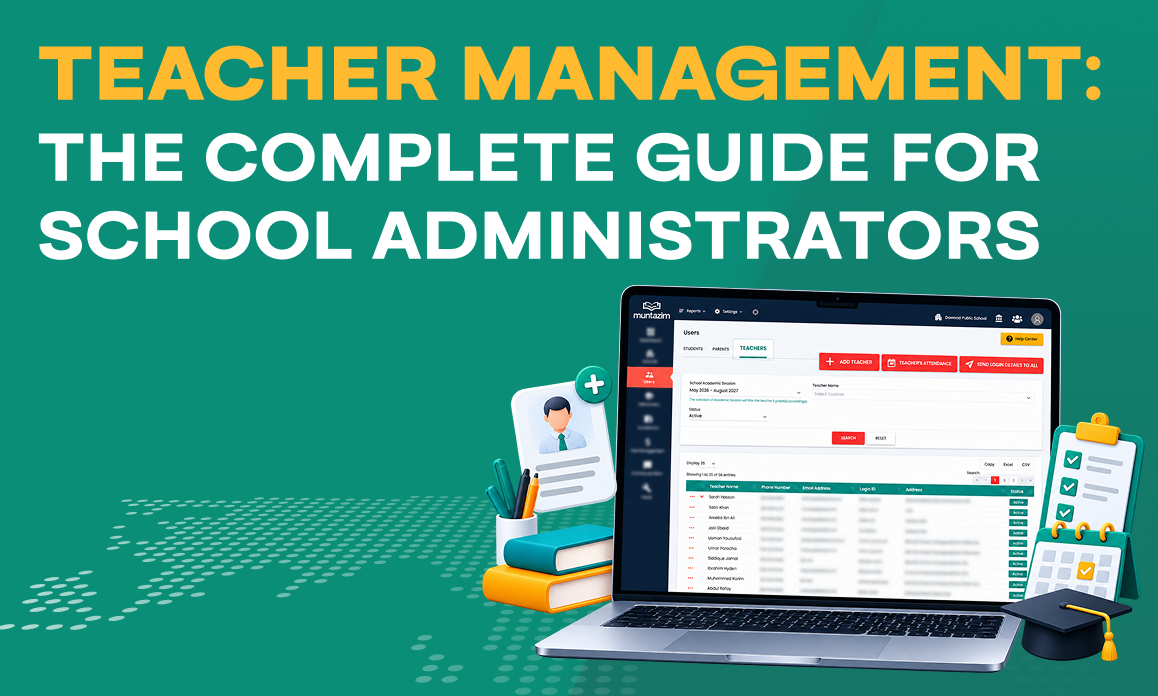
- Student Records and Enrollment Management: The foundation of any education management system is the student profile, a centralized record that includes personal details, enrollment status, attendance history, academic performance, and communication logs. For small schools, this replaces spreadsheets.
- Attendance Tracking: Manual attendance registers are time-consuming and error-prone. A digital system allows staff to log attendance from any device, sends automatic alerts to parents when a student is absent, and compiles attendance data into summaries and reports without any additional work.
- Academic and Grade Management: From lesson planning to assessment tracking, academic data management tools give teachers a structured way to record and share student progress. Parents can access grades through a portal rather than waiting for a physical report card.
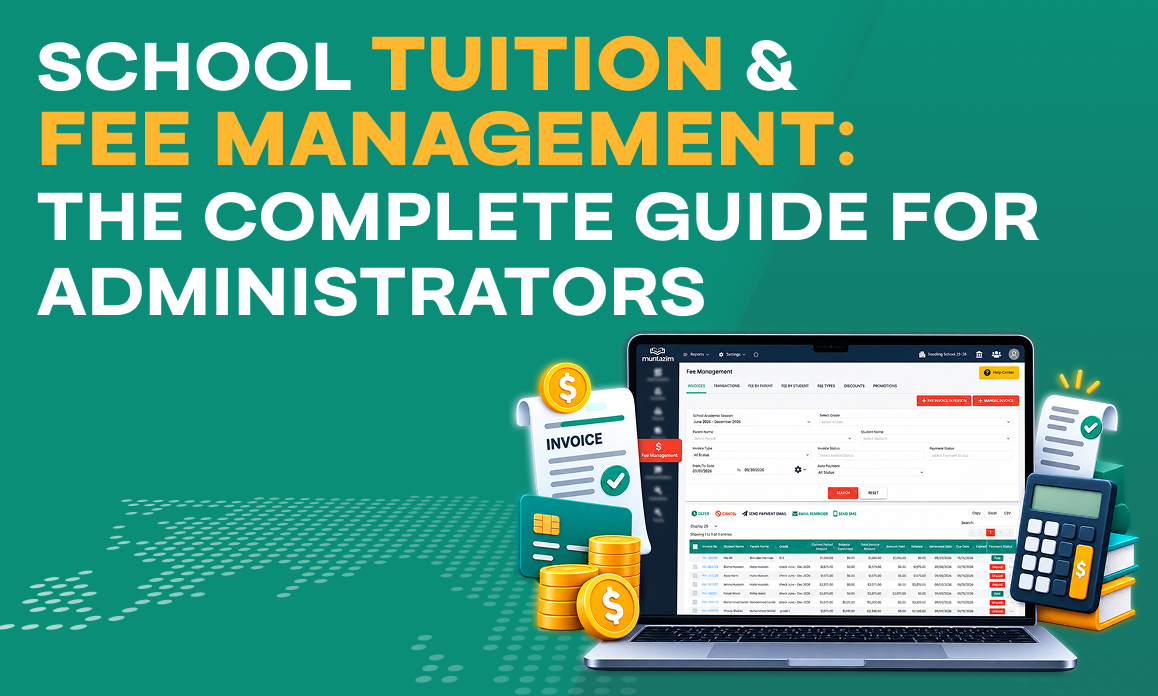
- Fee Management and Billing: For small schools managing their own finances, automated invoicing, payment tracking, and receipt generation eliminate hours of manual bookkeeping. Automated reminders reduce late payments without requiring staff to chase parents individually.
- Parent and Staff Communication: Centralized messaging that connects teachers, administrators, and parents, replacing scattered emails and group chats with organized, searchable communication that’s tied to individual student records.
- Reporting and Analytics: A real-time dashboard that shows enrollment figures, attendance trends, outstanding fees, and academic performance gives school leadership the information they need to make decisions with ease.
- Security and Data Protection: Since schools handle sensitive information, secure storage and controlled access permissions are critical.
Why Small Schools Need a Data Management System?
There’s a common misconception that sophisticated school software is for large institutions with complex tasks and big IT budgets. The thinking goes that small schools can get by with simpler tools. This misunderstands both the nature of small school administration and the way modern school software actually works.
Small schools face the same fundamental administrative challenges as large ones: student data tracking, parent communication, fee collection, and compliance documentation with fewer staff to handle them. That makes management even more critical, not less.
Consider what happens at a small school without a dedicated system:
One administrator manages enrollment, attendance, billing, and parent communication often simultaneously. When that person is absent, operations slow significantly because the “system” is dependent. Data accuracy suffers because manual processes introduce errors. Reporting takes hours because information isn’t organized in a way that generates summaries automatically.
Now consider the same school with a purpose-built platform. Enrollment forms are completed online by parents. Attendance is marked digitally, and alerts go out automatically. Fees are invoiced and tracked without manual bookkeeping. Reports are available on demand. The single administrator’s workload is cut significantly, and the school continues to function smoothly regardless of who is in the office. The scale of the solution has changed. The fundamental need hasn’t.
How an Educational Data Management System Supports Academic Outcomes
The operational benefits are clear. But there’s a deeper reason to invest in an educational data management system: it directly supports student outcomes.
When student data tracking is accurate and accessible, teachers can identify struggling students earlier. When attendance records are reliable, patterns of disengagement are visible before they become serious. When parents receive consistent, real-time updates through a school communication portal, their involvement in their child’s education increases, and that involvement is one of the most consistent predictors of academic success.
These connections are easy to overlook when you’re focused on the operational case for better school software. But the academic case is equally compelling. A school that knows accurately, in real time, how its students are performing is a school that can respond effectively. A school operating on guesswork and outdated manual records cannot.
What Makes Muntazim the Right Choice for Small Schools
Muntazim is a cloud-based school administration software platform built specifically for schools and educational programs in the USA. It brings the full range of school management capabilities, enrollment, attendance, academics, billing, communication, and reporting, into one intuitive, accessible system.
Here’s why it stands out for small schools in particular:
It’s purpose-built for the school types that are often underserved; Muntazim serves not just traditional schools, but Islamic schools, Maktabs, Hifz programs, after-school programs, and community learning centres. These institutions have specific operational needs, Hifz progress tracking, Islamic calendar integration, and multi-program enrolment, which generic school software doesn’t address. Muntazim does.
It doesn’t require a dedicated IT team. The platform is cloud-based, which means there’s no hardware to install, no servers to maintain, and no technical staff required. Small schools access a full-featured system through a browser or mobile app, with Muntazim’s support team available whenever needed.
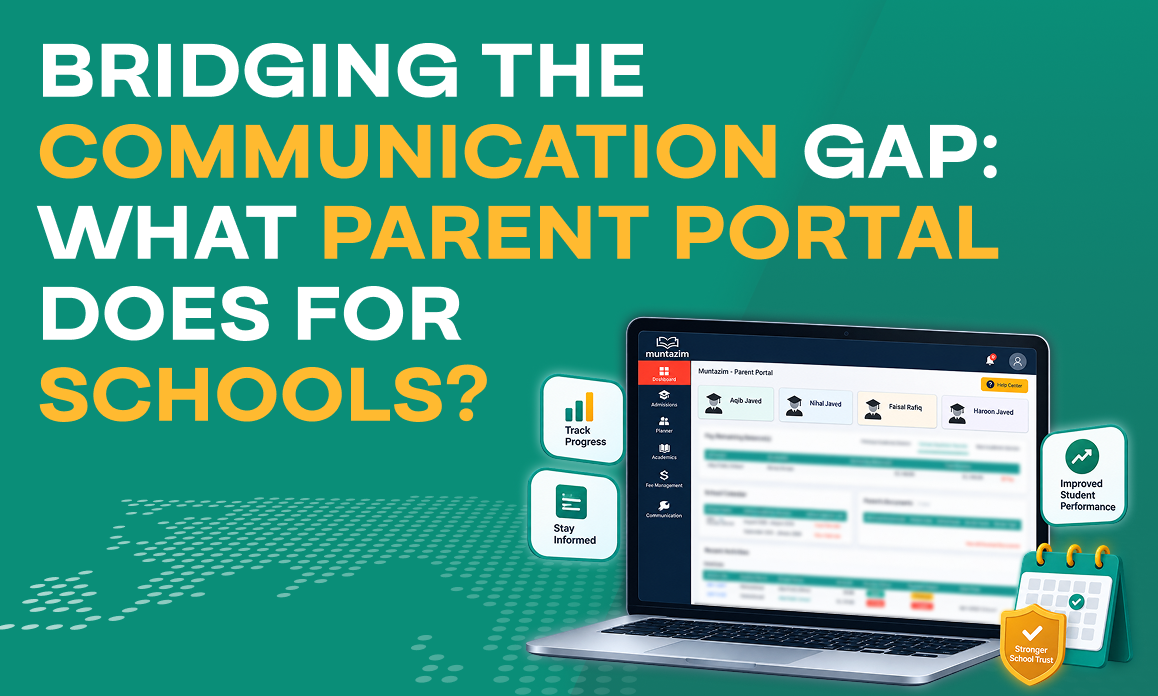
The Parent App puts communication in every parent’s pocket. Real-time attendance alerts, academic updates, fee statements, and school announcements are delivered directly to parents’ mobile devices. This level of proactive communication isn’t something most small schools can build manually; Muntazim makes it the default.
It scales as you grow. A system that fits your school with 80 students should still fit at 200. Muntazim’s multi-site architecture and role-based access controls mean the platform grows with your program without requiring you to switch systems or rebuild processes.
The numbers validate the trust. Muntazim currently serves 350+ schools and programs, with over $40M in school fees processed. For a small school evaluating a new platform, that track record matters.
How to Choose the Right Data Management System for Your School
Not every platform will be the right fit for every school. Here’s a practical framework for evaluating your options:
Start with your actual pain points. What is breaking down most often in your current setup? If it’s attendance accuracy, prioritize platforms with strong automated attendance features. If it’s parent communication, look for robust messaging and notification capabilities. Your biggest problems should drive your evaluation criteria.
Check that it handles your school type. Generic school software often assumes a traditional model. If you run a weekend school, a faith-based program, or an after-school centre, verify that the platform accommodates your specific enrollment model, calendar, and reporting needs.
Evaluate the parent-facing experience. The value of a school communication platform depends on whether parents actually use it. Look for a mobile app with a clean, intuitive interface. A portal that requires parents to navigate complex menus won’t be used consistently enough to deliver its full benefit.
Consider the support model. Small schools need responsive support. A platform that offers a knowledge base but no direct contact is a risk. Muntazim’s team is reachable directly by phone and email, which means problems get solved quickly rather than sitting in a ticket queue.
Look at the total cost, not just the license price. The real cost of a school operations management platform includes the staff time it saves. A platform that reduces administrative burden significantly is worth more than its subscription price suggests, and one that requires extensive manual workarounds isn’t saving you as much as the price tag implies.
Frequently Asked Questions
These are digital platforms that help schools automate administrative tasks, manage student information, track attendance, streamline communication, and improve overall operational efficiency.
These tools simplify admissions, organize student records, manage class schedules, automate fee collection, and improve planning processes, allowing schools to start the academic year productively.
Yes. Muntazim offers a comprehensive set of features designed specifically for educational institutions, helping schools manage operations and maintain accurate records through a centralized platform.
A school management system helps schools automate administrative processes, improve communication and maintain accurate records, all while reducing manual workload.
Schools should prioritize student management, attendance tracking, fee management, reporting, communication tools, data security, scalability, and user-friendly interfaces.
Yes. Smart management tools can be customized to meet the needs of both small and large institutions, helping schools of all sizes improve organization.
Conclusion: The Future of School Management Is Data-Driven
Choosing an educational data management system is one of the highest-leverage decisions a small school leader can make. The right platform doesn’t just reduce administrative friction; it improves the accuracy of your student records, strengthens your relationship with parents, gives teachers back time they currently spend on clerical tasks, and provides the data visibility that informed leadership requires.
Whether you run a traditional primary school, a weekend Islamic program, a Maktab, or an after-school centre, Muntazim is built to serve every organizational need. It’s not an enterprise system adapted for smaller institutions. It’s a platform designed from the ground up for the kinds of schools that are often overlooked by the mainstream education technology market, backed by the track record of 350+ institutions that have trusted it with their operations.
Transform Your School Management with Muntazim.
.Experience how a centralized data management system can simplify everyday tasks.