Introduction
Staying updated on a child’s school life has never been simple for busy parents. Attendance records live in one place, grades in another, and announcements arrive by email, text, or a note sent home in a backpack.
A Parent-Teacher Portal solves this by giving families one centralized place to check attendance, academic progress, assignments, announcements, and fees, instead of piecing information together from scattered sources. When parents can see what’s happening at school in real time, they’re better positioned to support their child, and schools benefit from a more informed, engaged community.
This guide covers five ways this kind of access supports student success and strengthens the relationship between families and schools.
What Is a Parent Portal?
Definition of a Parent Portal
This kind of system is a secure, centralized digital platform that connects families with their child’s school information. Unlike a basic messaging app or a one-way announcement tool, a complete school management portal brings together academic records, attendance, communication, and administrative details, so parents aren’t logging into five different systems to get a full picture.
What Can Parents Access?
A well-built portal typically includes:
- Student grades and report cards
- Attendance records
- Assignments and academic updates
- Class schedules
- School announcements
- Direct teacher communication
- Events and calendars
- Fee information and payment options
- Important documents
Why Schools Are Adopting Parent Portals
Schools are moving toward centralized parent access because it reduces communication gaps, gives families easier access to information, lowers administrative workload for staff, and encourages parents to become more involved in their child’s education, without requiring extra phone calls or paperwork on either side.
5 Ways a Parent Portal Improves Student Performance and School Trust
1. Gives Parents Real-Time Visibility into Student Progress
Keep Parents Informed About Academic Performance
Parents can check grades, report cards, and assignment updates as they happen, rather than waiting for a quarterly report card. This gives them an ongoing view of academic progress over time, not just a single snapshot.
Helps Parents Identify Problems Earlier
That ongoing view makes it easier to spot declining grades, missing assignments, or attendance issues before they add up. It also highlights areas where a student may need extra support before it shows up on a report card.
Encourages Early Intervention
Parents can reach out to a teacher before a small concern becomes a bigger one, rather than after the fact. Schools can also work with families more proactively when everyone has access to the same information.
Key takeaway: Better visibility allows parents and schools to respond to academic challenges earlier.
2. Improves Parent-Teacher Communication
Centralize Communication
Instead of scattered emails, missed calls, and paper notices, centralized messaging keeps conversations in one place. This keeps important conversations connected to the student’s actual school record.
Make Communication More Convenient
Parents can reach out without needing an in-person meeting, fitting communication into their own schedule. Teachers, in turn, can send updates efficiently to an entire class or a single family.
Create Better Parent-Teacher Collaboration
This setup makes it easier to discuss academic concerns and share feedback as they come up. It also helps both sides coordinate support quickly when a student needs it.
Key takeaway: Consistent communication helps parents feel more connected to teachers and the school.
3. Encourages Better Attendance and Student Engagement
Give Parents Access to Attendance Information
When parents can view attendance records directly, patterns of repeated absences or tardiness become visible. Timely notifications also alert families when something needs their attention.
Help Parents Take Action
This visibility helps families address attendance concerns sooner, rather than after the fact. Schools can flag issues quickly, instead of waiting for a report card to reveal the problem.
Connect Attendance with Academic Performance
Since frequent absences tend to affect learning, this connection matters beyond just tracking days missed. Giving parents this visibility gives them what they need to support consistent attendance.
Key takeaway: When parents can see attendance patterns, they’re better positioned to help students stay engaged.
4. Builds Transparency and Increases School Trust
Give Parents Access to Accurate Information
Consistent access to academic records, attendance, fees, and announcements keeps families genuinely informed. Nothing important gets buried or delayed in the process.
Reduce Information Gaps
Parents aren’t relying on second-hand information or rumours about what’s happening at school. Everyone works from the same school-provided data instead.
Demonstrate Accountability
Consistent access to records can make school processes feel more transparent overall. Clear, ongoing communication also helps reduce misunderstandings before they escalate.
Key takeaway: Transparency helps schools demonstrate that parents are informed and that information is accessible.
5. Creates a More Connected School-Parent Relationship
Keep Parents Involved Beyond Report Cards
Regular academic updates, event announcements, and ongoing teacher communication keep parents engaged throughout the year. This goes well beyond the occasional check-in at a parent-teacher conference.
Make Parent Involvement Easier
Because families can check information whenever it’s convenient, involvement becomes less of an administrative hurdle. It turns into a habit rather than a scheduled obligation.
Build Long-Term Trust
Consistent communication, accessible information, and faster responses all add up over time. Together, they build the kind of long-term trust that occasional updates never quite achieve.
Key takeaway: This kind of access can turn parent engagement from occasional communication into an ongoing relationship.
Curious how this could look for your school?
See the parent experience firsthand.
Key Parent Portal Features Schools Should Look For
| Feature | Why It Matters |
|---|---|
| Student Progress | Helps parents monitor academic performance |
| Attendance Tracking | Makes attendance records visible |
| Assignment Updates | Keeps parents informed about schoolwork |
| Parent-Teacher Messaging | Improves communication |
| Announcements | Helps deliver important school information |
| Calendar | Keeps parents aware of events and deadlines |
| Fee Management | Improves financial transparency |
| Report Cards | Gives parents access to academic results |
| Notifications | Helps parents receive timely updates |
| Mobile Access | Allows parents to check in conveniently |
How Schools Can Get the Most from a Parent Portal
Keep Information Accurate & Updated
Outdated records reduce trust quickly; a grade that hasn’t changed in weeks or an old announcement makes parents stop checking the portal altogether. Assigning clear responsibility for each type of data, rather than leaving it as a shared afterthought, keeps information current. A quick monthly spot-check can catch gaps before parents notice them.
Train Teachers & Administrators
A portal is only as useful as the people entering data into it, so staff need to understand how the system actually works. Clear expectations around response times and what belongs in the portal versus a phone call keep communication consistent. A short refresher at the start of each year helps as staff turnover happens.
Encourage Parents to Actually Use It
Even a well-built portal fails if parents never log in, and adoption usually comes down to how it’s introduced. Bringing it up during enrollment, with simple onboarding steps, gets parents started while they’re already setting up accounts. Explaining the practical benefit clearly, checking grades and attendance anytime, matters more than listing features.
Protect Student & Family Data
Parent and student information is sensitive, and a mishandling incident can undo months of trust in a single day. Secure authentication and carefully controlled user permissions keep each family seeing only their own child’s records. Following appropriate privacy practices, including how data is retained, keeps the system trustworthy over time.
Parent Portal vs. Traditional Parent Communication
| Area | Traditional Communication | Centralized Digital Access |
|---|---|---|
| Academic Updates | Periodic | More accessible and ongoing |
| Attendance Tracking | Often reported periodically | Easier to monitor |
| Communication | Emails, calls, paper notices | Centralized digital messaging |
| School Announcements | Multiple channels | Centralized |
| Records | Paper/files or scattered systems | Centralized access |
| Parent Engagement | Often reactive | More continuous |
| Transparency | Depends on communication | Greater visibility |
How Muntazim Supports Parent-School Communication
Parent Access to Academic Information
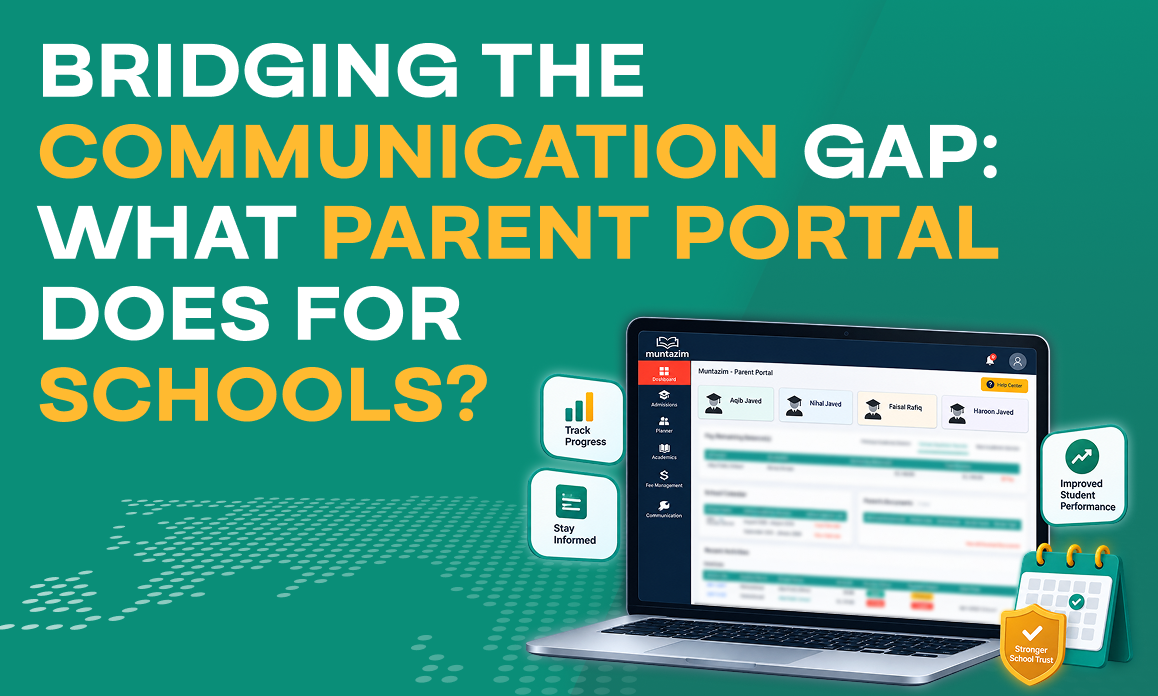
Parents can log into a personalized dashboard to check their child’s academic performance without waiting for a report card. Real-time access means they see how things are going this week, not just at term’s end. That kind of visibility helps families catch small concerns early, straight from the school’s own records.
Communication Between Parents and Teachers
Messages between parents and teachers run through one centralized system instead of scattered emails, texts, and calls. Both sides get notified when a new message arrives, so conversations don’t go unanswered. This makes it easier for staff and families to collaborate on a concern or coordinate support without scheduling a call.
Access to Attendance, Grades, and Assignments
Parents can view attendance directly- present days, absences, tardies- instead of hearing about issues after the fact. Grades and assignments update in real time, giving an ongoing picture rather than a single end-of-term snapshot. This visibility helps families spot patterns, like missed assignments or a dip in a subject, while there’s still time to act.
School-Wide Communication
Announcements reach every parent at once, so important information doesn’t depend on a note making it home. Notifications alert families in real time to schedule changes or upcoming events. A shared calendar keeps everyone aware of deadlines well in advance, cutting down on last-minute surprises.
One Connected School Management System
Parent communication runs through the same system as attendance, academics, and fees, rather than a separate disconnected app. That means a parent’s dashboard reflects exactly what the school’s staff are working from, with no gap between the two. Connecting everything this way reduces the information silos that come from juggling multiple tools.
Measuring the Impact of a Parent Portal
Schools can evaluate whether adoption is actually working by tracking:
- Portal Login and Usage Rates — how often parents actually log in, which shows whether adoption is real or just theoretical.
- Parent Response Rates — how frequently parents reply to messages or notifications, a signal of engagement rather than passive access.
- Teacher-Parent Communication Volume — the number of messages exchanged, indicating how actively staff and families are using the system to connect.
- Attendance Trends — whether attendance improves or stays consistent over time, since visibility alone doesn’t guarantee behaviour change.
- Assignment Completion Rates — whether students are turning in more work on time once parents can track deadlines directly.
- Parent Satisfaction — direct feedback from surveys or informal check-ins on whether the system is actually meeting families’ needs.
- Communication-Related Complaints — a drop (or rise) in complaints about missed updates or unclear information, reflecting how well the system is working in practice.
- Response Time to Parent Inquiries — how quickly staff reply to questions, since slow responses undercut the whole point of centralized communication.
- Parent Participation in School Events — whether more families show up to events once they’re consistently reminded and informed.
It helps to establish a baseline before rollout and compare results a semester or a year later, rather than judging impact from a single month of data.
Common Mistakes Schools Should Avoid
Even a well-built system can fall short if it’s rolled out carelessly. A few recurring missteps tend to undercut adoption and trust the most:
- Treating it as only an announcement tool underuses a system built for two-way communication.
- Uploading outdated information quickly erodes parent trust.
- Overloading parents with notifications gets everything tuned out.
- Skipping teacher training leaves even good software underused.
- Ignoring mobile accessibility shuts out most parents.
- Failing to set clear communication policies confuses staff and parents alike.
- Not addressing data privacy and security risks undoing months of trust in one
Expecting technology alone to improve student performance without responsive follow-through
Frequently Asked Questions (FAQs)
A secure digital platform where parents can access their child's grades, attendance, assignments, and school communication in one centralized place.
By giving parents earlier visibility into grades, missing assignments, and attendance issues, so concerns can be addressed before they grow into larger problems.
Yes, most systems, including Muntazim's, give parents access to grades, report cards, and ongoing academic updates.
It centralizes messaging in one place instead of scattered emails and calls, making it easier for parents and teachers to stay connected and coordinate support.
Real-time attendance visibility helps parents notice patterns and act sooner, though consistent follow-through from both families and schools matters too.
Consistent access to accurate, shared information tends to reduce misunderstandings and helps schools demonstrate accountability to families.
Look for academic progress tracking, attendance visibility, messaging, announcements, programs, fee management, and user access.
Yes, small schools benefit just as much from centralized communication, since staff often wear multiple hats and can't manage constant one-off phone calls and emails.
Conclusion
Student success depends on collaboration between students, parents, and schools, and a well-used Parent-Teacher Portal makes that collaboration easier. Better visibility, stronger communication, attendance awareness, transparency, and deeper engagement all stem from the same idea: when families have accurate, timely access to school information, they’re better equipped to support their child.
Technology alone doesn’t guarantee better grades; it works best when paired with responsive communication and solid administrative practices on the school’s side. Muntazim brings parent access, teacher communication, and school-wide administration into one connected system, giving families the visibility they need without adding extra work for staff.
Want to see the parent experience in action?
Related Resources
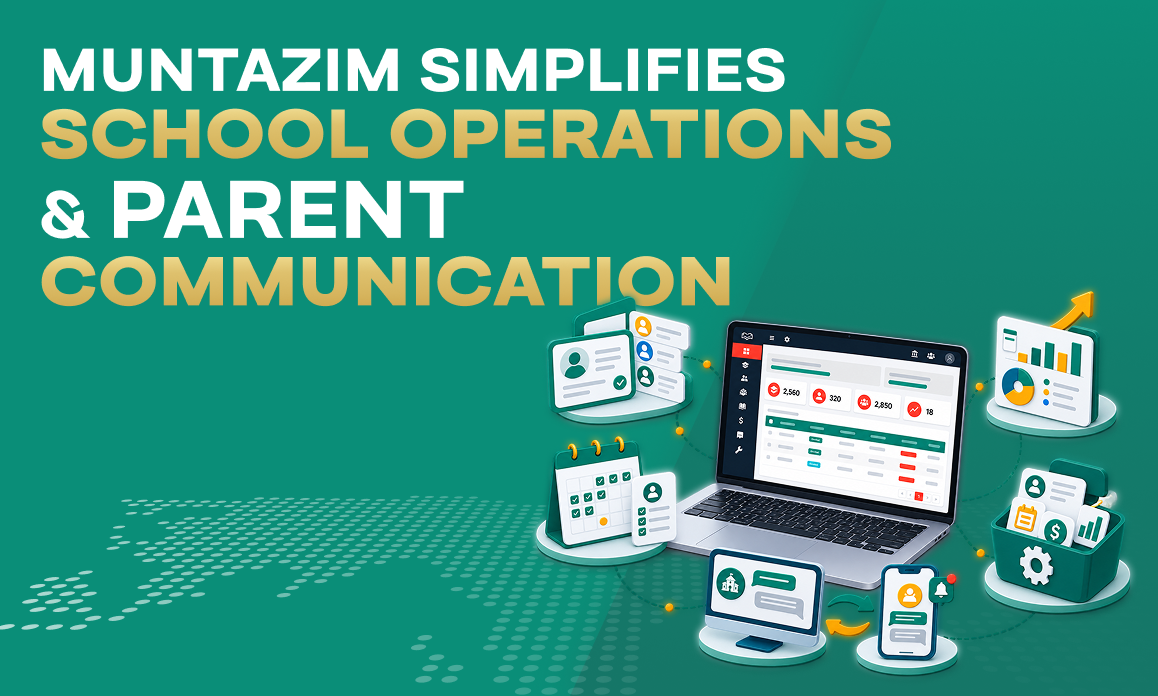
5 Ways Muntazim Simplifies School Operations and Parent Communication
5 Ways a Parent Portal Improves Student Performance and School Trust
How Muntazim Improves Communication Between Schools and Parents
Aamnah Farhan
Aamnah is a Content Marketing Professional specializing in school management software, student information systems, and Islamic school challenges & solutions. She develops research-driven content that helps schools and educational institutions streamline operations, adopt digital solutions and stay informed about the latest trends in education and school management.