Introduction
A well-managed classroom is calmer, more organised, and more productive, and the right classroom management techniques can create that atmosphere. In Islamic schools, teachers move between very different settings, from Quran classes and Arabic lessons to Islamic studies and general academic subjects, and each one needs structure.
Every teacher faces the following challenges: different learning capacities, distractions, limited attention spans, and the need to maintain discipline. Good classroom management skills enable teachers to form strong relationships while maintaining professional boundaries. This guide shares 10 practical techniques to improve behavior and engagement.
Why Is Classroom Management Important in Islamic Schools?
Good classroom management helps teachers:
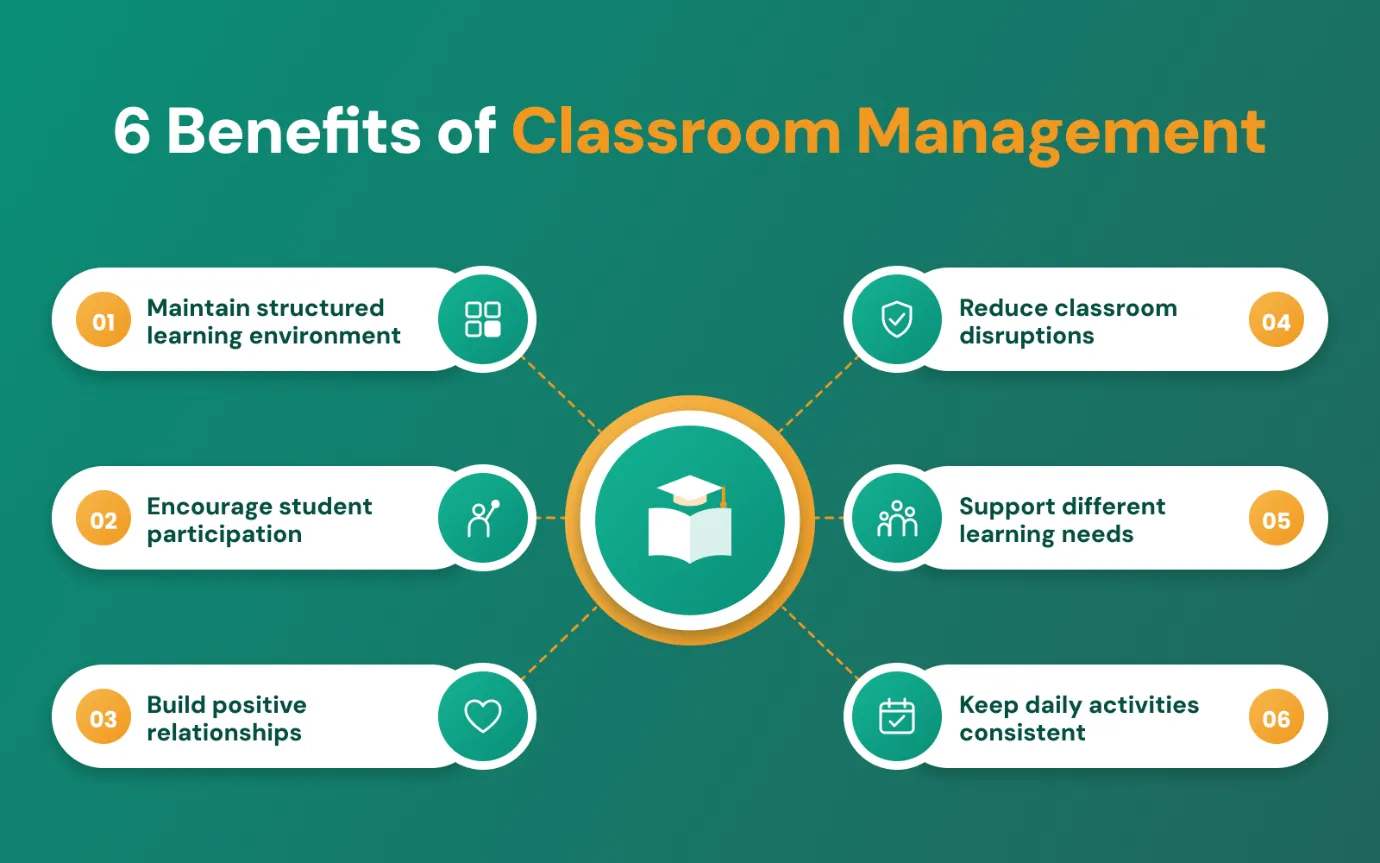
Islamic values such as respect, honesty, patience, responsibility, and kindness can guide how students behave. Discipline should aim to teach responsibility and self-control, not rely only on punishment.
Top 10 Classroom Management Techniques for Islamic Schools
These 10 Classroom Management Techniques work across Quran, Arabic, Islamic studies, and general subjects.
1. Set Clear Classroom Rules and Expectations
Set simple, age-appropriate rules at the start of the year, covering listening, speaking, participation, and group work. Link them to values like respect and honesty, display them where students can see them, and explain why they matter. Example: Teach students to listen respectfully when a classmate or teacher is speaking.
2. Establish Consistent Daily Classroom Routines
Create predictable routines for starting lessons, taking attendance, handing out materials, and moving between activities. Use the same steps for Quran recitation, Islamic studies, and academic lessons, and visual schedules for younger students. Predictable routines reduce confusion and save teaching time.
3. Use Positive Reinforcement to Encourage Good Behavior
Recognize good behavior with kind words, classroom responsibilities, achievement charts, or group recognition. Encourage kindness, cooperation, punctuality, and helping classmates. Avoid comparing students or embarrassing anyone, since praise encourages children to repeat constructive behavior.
4. Build Strong Teacher-Student Relationships
Learn each student’s name, interests, strengths, and needs. Listen to their concerns, treat everyone fairly, and offer guidance when they make mistakes. Trust makes students more willing to cooperate.
5. Keep Students Engaged Through Interactive Lessons
Use discussions, group activities, storytelling, quizzes, and practical exercises in Quran, Arabic, Islamic studies, and general subjects. Connect content to students’ everyday lives and balance teacher talk with student participation. Engaging lessons reduce boredom and off-task behavior.
6. Use Fair and Consistent Discipline Strategies
Set consequences that are clear, reasonable, and age-appropriate. Address disruptions calmly and privately, explain what was wrong and what to do instead, and apply rules without favouritism. Focus on building self-discipline, and avoid harsh punishment, humiliation, or public shaming.
7. Organize Classroom Space and Learning Materials
Arrange seating for visibility, movement, and interaction, and keep materials organized and easy to reach. Where space allows, create areas for reading, group work, and individual work. Reduce distractions, and use displays that support learning and positive behavior.
8. Support Different Learning Styles and Student Needs
Students learn at different paces, so mix visual, auditory, reading, writing, and hands-on activities. Break complex tasks into smaller steps, give extra guidance to those who need it, and offer suitable challenges to fast learners. This helps more students take part successfully.
9. Encourage Student Responsibility and Leadership
Give students age-appropriate roles, such as classroom helper, materials organizer, group leader, or attendance assistant, and rotate them. Encourage students to keep their learning areas tidy, and use group activities to build teamwork and accountability.
10. Maintain Regular Communication with Parents
Keep parents informed about progress, behavior, and expectations. Share good news as well as areas to improve, using parent meetings, school communication platforms, and scheduled updates. When parents reinforce routines and study habits at home, students benefit.
Ready to create a more engaging and organized classroom?
Transform the way your Islamic school operates with Muntazim.
Classroom Management Strategies for Different Islamic School Settings
Quran and Hifz Classes
Set clear routines for recitation, revision, and individual practice. Encourage patience and respect while others recite, give individual feedback, and support students who learn at different speeds.
Islamic Studies and Arabic Classes
Use discussions, storytelling, vocabulary activities, and group exercises. Welcome questions, connect ideas to everyday life, and keep discussions respectful when students share different views.
Weekend Islamic Schools
Use simple routines to help students settle into a shorter schedule. Keep lessons interactive to hold attention, set clear expectations for attendance and participation, and plan activities that fit limited class time.
Common Classroom Management Mistakes Teachers Should Avoid
Here’s a list of patterns that teachers should avoid to maintain a healthy and encouraging, learning environment in the classroom:
- Creating too many rules for students to remember
- Not following the same classroom rules for all students
- Relying only on punishment instead of positive guidance
- Ignoring repeated disruptive student behavior
- Drawing comparison between studentspublicly
- Using lessons that do not encourage participation
- Failing to share behavior concerns with parents
- Not considering different learning needs and abilities
How School Management Software Supports Better Classroom Management
Classroom management software helps with the administrative side of classroom management. The software helps manage attendance, student data, parent-teacher communication, assignments, progress monitoring, lesson planning, and student performance.
With all these tasks organized in one software, the administrative burden is minimized. Software does not replace good teaching, classroom relationships, or in-person guidance, but it can make daily routines easier to run.
Running a weekend school or Hifz program?
See how Muntazim supports Islamic schools.
How Muntazim Helps Islamic Schools Stay Organized
Muntazim is a cloud-based school management system built for Islamic schools, weekend schools, Maktab, and Hifz programs. It helps teachers and administrators stay organized in several ways:
- Attendance Management:keeps student attendance records organized.
- Lesson Planner:helps teachers organize lesson plans and teaching activities.
- Communication:supports contact between teachers, parents, and administrators.
- Parent and Teacher Portals:give access to relevant student and school information.
- Assignments and Academics:help organize academic activities and student progress.
These tools support consistent routines, parent involvement, and organized teaching. They do not manage student behavior for you, since that still depends on teachers.
Frequently Asked Questions (FAQs)
Clear rules, consistent routines, positive reinforcement, fair discipline, engaging lessons, and regular parent communication work well together.
Set clear expectations, apply rules fairly, correct behavior calmly, and guide students with values like respect and responsibility.
Use clear routines for recitation and revision, encourage patience, and give individual feedback.
Stay calm, speak privately when possible, explain what to do differently, and involve parents if the behavior continues.
Use discussions, storytelling, group activities, and real-life examples, and let students take part.
By staying informed, reinforcing routines at home, and communicating with teachers early.
It can help with organization, such as attendance, schedules, and communication, but good teaching still matters most.
Conclusion
Classroom management helps build a respectful, organized, and structured atmosphere. Rules, routines, rewards, discipline, and parental involvement are important components. Islamic values could help students become responsible, respectful, patient, and kind individuals. The use of the classroom management techniques should be done wisely.
The school administration can help teachers organize their class, attendance, lessons, grades, and communications with a proper school management system.
Ready to take the next step?
Explore Muntazim and see how it keeps your school organized.
Related Resources:
5 Ways Muntazim Simplifies School Operations and Parent Communication
How to Reduce Teacher Administrative Burden with School Management Software
Aamnah Farhan
Aamnah is a Content Marketing Professional specializing in school management software, student information systems, and Islamic school challenges & solutions. She develops research-driven content that helps schools and educational institutions streamline operations, adopt digital solutions and stay informed about the latest trends in education and school management.